
Loft aerial or roof aerial: which does your home need?
Hiding the aerial in the loft is tempting, but not every roof lets enough signal through. Here’s how our engineers decide.

Plenty of people would rather not have an aerial on the chimney, and a loft aerial can be a neat answer. It’s out of the weather and out of view, provided the roof lets through enough signal.
What gets in the way
- The roof itself. Tiles and slates weaken the signal, and wet tiles weaken it more.
- Foil-backed insulation. Common in newer lofts and loft conversions, it can block the signal almost entirely.
- Solar panels and water tanks. Anything metal between the aerial and the transmitter causes problems.
- Trees and buildings. If the signal is already weak outside, losing more of it in the roof tips it over the edge.
How we decide
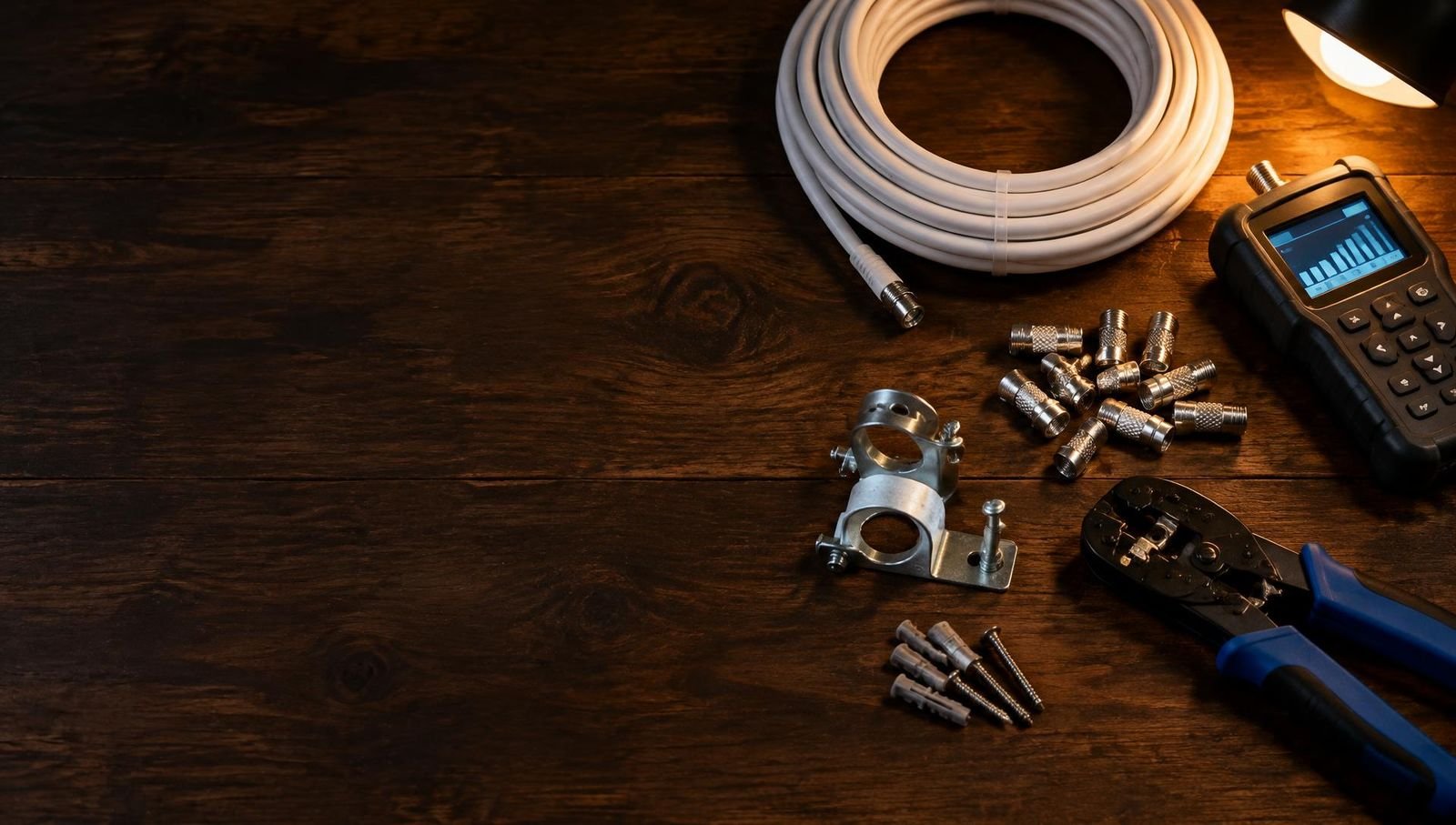
We don’t guess. Our engineer takes a signal meter into the loft and checks every multiplex at the exact position the aerial would sit. Strong, steady readings mean a loft aerial will do the job. Borderline ones mean we recommend a discreet roof position instead, such as behind the chimney, hidden from passers-by.
Good to know. A loft aerial feeding several TVs usually needs a small amplifier. Choose one with a 4G and 5G filter built in to avoid interference from nearby phone masts.
The short version
Open outlook, few TVs, no foil in the loft: a loft aerial is worth testing. Trees, a weak area or lots of rooms to feed: a roof aerial will be more reliable. Either way, the meter decides. See our TV aerial installation page to book a survey.
Talk to a local engineer
Ask on WhatsApp with a photo, or call 01737 321341.